.png)
Modern vehicles rely on complex electrical systems that connect sensors, control units, lighting modules, infotainment systems, and safety features. These systems are linked through wiring harnesses that distribute power and transmit signals throughout the vehicle.
Globally, automotive cables are most commonly designed according to three major standard systems:
- JASO Standard, widely used by Japanese automotive manufacturers.
- ISO / DIN Standard, commonly adopted across the European automotive industry.
- SAE Standard, primarily used in North America and many aftermarket applications.
Each standard includes a range of cable types designed for different electrical loads, temperature environments, and installation conditions within the vehicle.
In this guide, we introduce the common automotive cable standards and explain the differences between widely used cable types, helping engineers and buyers better understand how these cables are used in automotive wiring systems.
Common Automotive Cable Standards
Automotive cables used around the world generally follow three major standard systems. These standards define key requirements, including conductor construction, insulation materials, temperature resistance, and overall performance specifications.
Different regions and vehicle manufacturers typically adopt different standards.
Standard | Commonly Used In | Typical Cable Types |
JASO | Japan and many Asian automotive manufacturers | AV, AVS, AVSS, AVX, AEX |
ISO / DIN | European automotive industry | FLRY-A, FLRY-B, FLRYW-B, FLRX-B |
SAE | North America and aftermarket automotive applications | GPT, TWP, TXL, GXL, SXL |
Although these standards originated in different regions, modern vehicles may use a combination of these cable types depending on the design requirements of the wiring harness and the specifications set by the vehicle manufacturer.
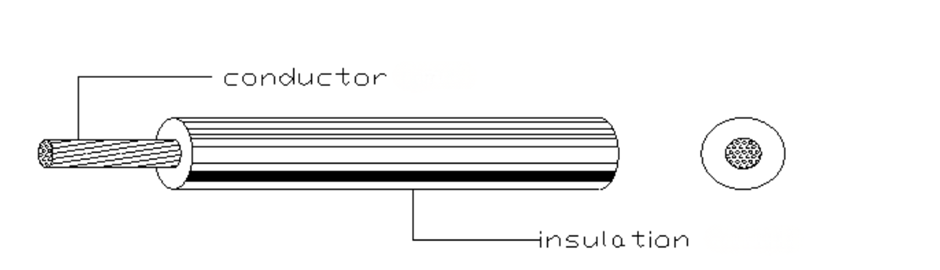
JASO Automotive Cable Standards
JASO (Japanese Automotive Standards Organisation) standards are widely used by Japanese automotive manufacturers and their global supply chains. They define performance requirements for low-voltage automotive cables, including conductor structure, insulation materials, temperature resistance, and durability.
JASO cables are commonly used in vehicle wiring harnesses for power distribution and signal transmission between electronic systems. The standard includes several cable types with different insulation thicknesses and temperature ratings to support a range of automotive applications.
AV Automotive Cable
The name AV comes from two components:
- A – Automotive
- V – PVC insulation
Key characteristics and specifications
- Insulation material: PVC insulation compliant with RoHS environmental requirements
- Insulation structure: Standard wall thickness automotive cable
- Rated temperature: 80°C
- Reference standard: JIS C 3406:1993
- Flame resistance: Passes JIS C 3406:1993 Section 6.8 flame test
- Manufacturing feature: Uniform insulation thickness to support easy stripping and cutting during wiring harness assembly
- Typical use: Designed for vehicle internal wiring applications
Typical applications
AV cables are commonly used in general automotive wiring harnesses, particularly in standard electrical circuits where moderate temperature resistance is sufficient.
AVS Automotive Cable
In AVS cables, the “S” represents Thin Wall insulation.
Key characteristics and specifications
- Insulation material: PVC insulation compliant with RoHS environmental requirements
- Insulation structure: Thin-wall design for reduced cable diameter and lighter weight
- Rated temperature: 80°C
- Reference standard: JASO D611
- Flame resistance: Passes JASO D611 Section 6.17 flame test
- Manufacturing feature: Uniform insulation thickness to support easy stripping and cutting during wiring harness assembly
- Typical use: Designed for vehicle internal wiring applications
Typical applications
AVS cables are commonly used in modern vehicle wiring harnesses, where space optimisation and weight reduction are important design considerations.
AVSS Automotive Cable
The “SS” in AVSS stands for Super Thin Wall insulation.
Key characteristics and specifications
- Insulation material: PVC insulation compliant with RoHS environmental requirements
- Insulation structure: Super thin-wall design for smaller cable diameter and reduced weight
- Rated temperature: 80°C
- Reference standard: JASO D611
- Flame resistance: Passes JASO D611 Section 6.17 flame test
- Manufacturing feature: Uniform insulation thickness to support easy stripping and cutting during wiring harness assembly
- Typical use: Designed for vehicle internal wiring applications
Typical applications
AVSS cables are widely used in compact automotive wiring harness designs, where minimising harness size and overall vehicle weight is critical.
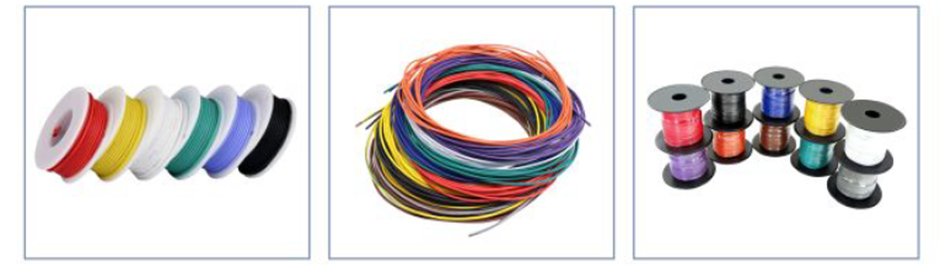
AEX Automotive Cable
The name AEX combines two characteristics:
- E – Heat-resistant insulation
- X – Cross-linked insulation
Key characteristics and specifications
- Conductor: Stranded bare copper conductor (0.5–8 mm²)
- Insulation material: XLPE (cross-linked polyethylene) insulation, compliant with RoHS environmental requirements
- Insulation structure: Cross-linked insulation designed for improved thermal and mechanical performance
- Rated temperature: 120°C
- Reference standard: JASO D608
- Flame resistance: Passes JIS C 3406:1993 Section 6.8 flame test
- Manufacturing feature: Uniform insulation thickness to support easy stripping and cutting during wiring harness assembly
- Typical use: Designed for vehicle internal wiring applications
Typical applications
AEX cables are typically used in higher-temperature areas within the vehicle, such as wiring systems near the engine compartment or other heat-exposed environments, where improved thermal resistance and durability are required.
Cable Type | Insulation Type | Structure | Typical Rated Temperature |
AV | PVC | Standard wall | 80°C |
AVS | PVC | Thin wall | 80°C |
AVSS | PVC | Super thin wall | 80°C |
AEX | Cross-linked polyethylene (XLPE) | High-temperature cross-linked insulation | 120°C |
Compared with traditional standard-wall cables, thin-wall and ultra-thin-wall designs help reduce the overall weight and size of vehicle wiring harnesses. This is particularly important as modern vehicles incorporate an increasing number of electronic components and sensors.
Cross-linked insulation types such as AVX and AEX are typically used in areas where higher temperature resistance and improved mechanical durability are required.
ISO Automotive Cable Standards - The FLRY Series
In the European automotive industry, automotive cables are commonly manufactured in accordance with ISO and DIN standards, particularly ISO 6722, which specifies requirements for low-voltage cables used in road vehicles.
These standards define key parameters such as conductor construction, insulation materials, temperature resistance, and electrical performance. ISO-compliant cables are widely used by European vehicle manufacturers and their suppliers in automotive wiring harness systems.
One of the most common naming systems used for European automotive cables is the FLR series, which includes several variations for different insulation thicknesses and temperature ratings.
The name FLRY reflects several key construction characteristics:
- F – Automotive cable compliant with European vehicle wiring standards (typically ISO 6722)
- L – Stranded fine copper conductor for improved flexibility
- R – Insulation material
- Y – PVC insulation
Additional letters or suffixes in the cable name indicate differences in insulation thickness, oil resistance, or temperature capability.
FLRY-A Automotive Cable
FLRY-A is a thin-wall automotive cable widely used in European vehicle wiring harness systems. Compared with traditional standard-wall automotive wires, the thinner insulation helps reduce cable diameter and weight while maintaining reliable electrical performance.
Key characteristics and specifications
- Conductor: Stranded, tinned or bare copper conductor (0.22–2.5 mm²)
- Insulation material: PVC insulation compliant with RoHS environmental requirements
- Insulation structure: Thin-wall design to reduce cable size and weight
- Rated temperature: 80 °C
- Reference standard: DIN 72551:1991
- Flame resistance: Passes DIN 72551-5:1991 Section 3.7.1 flame test
- Manufacturing feature: Uniform insulation thickness to ensure easy stripping and cutting during wiring harness assembly
- Typical use: Designed for vehicle internal wiring applications
FLRY-B Automotive Cable
FLRY-B is a super-thin-wall automotive cable commonly used in European vehicle wiring harness systems. Compared with standard-wall cables, the thinner insulation helps reduce cable diameter and weight while maintaining reliable electrical performance.
Key characteristics and specifications
- Conductor: Stranded, tinned or bare copper conductor
- Insulation material: PVC insulation compliant with RoHS environmental requirements
- Insulation structure: Super thin-wall design for reduced cable size and weight
- Rated temperature: 105°C
- Reference standard: DIN 72551-5:1991
- Flame resistance: Passes DIN 72551-5:1991 Section 3.7.1 flame test
- Manufacturing feature: Uniform insulation thickness to ensure easy stripping and cutting during wiring harness assembly
- Typical use: Designed for vehicle internal wiring applications
Compared with traditional automotive wires, thin-wall and super-thin-wall designs such as FLRY-A and FLRY-B help reduce wiring harness size and overall vehicle weight. These cable types use thinner PVC insulation while maintaining reliable electrical performance, supporting modern vehicle design where space efficiency and weight reduction are important considerations.
In contrast, cables such as FLRX-B use cross-linked polyethylene (XLPE) insulation, providing improved thermal resistance and mechanical durability. This makes them suitable for applications where higher operating temperatures or more demanding environmental conditions may occur.
SAE Automotive Cable Standards
In North America, automotive cables are commonly manufactured according to standards developed by the SAE (Society of Automotive Engineers). These standards define the electrical, thermal, and mechanical requirements for low-voltage automotive wiring used in vehicles and related equipment.
SAE automotive cables are widely used in passenger vehicles, trucks, and aftermarket automotive applications. Compared with other regional standards, SAE cable types are often categorised by insulation thickness and temperature capability.
GPT Primary Wire
GPT (General Purpose Thermoplastic) wire is a widely used automotive cable type in North American vehicle wiring systems. It is typically used for general electrical connections within automotive wiring harnesses.
Key characteristics and specifications
- Insulation material: PVC insulation compliant with RoHS environmental requirements
- Insulation structure: Standard wall thermoplastic automotive wire
- Rated temperature: -40°C to +85°C
- Reference standard: SAE J1128
- Manufacturing feature: Uniform insulation thickness to ensure easy stripping and cutting during wiring harness assembly
- Typical use: Designed for vehicle internal wiring applications
TWP Primary Wire
TWP (Thin Wall Thermoplastic) wire is a commonly used automotive cable type in North American vehicle wiring systems. Compared with standard GPT wire, TWP cables use a thinner insulation wall, helping reduce cable diameter and overall harness weight while maintaining reliable electrical performance.
Key characteristics and specifications
- Conductor: Stranded copper conductor for improved flexibility
- Insulation material: Thermoplastic PVC insulation
- Reference standard: SAE J1128
- Insulation structure: Thin-wall design for lighter weight and smaller cable diameter
- Performance characteristics: Resistant to heat, oil, abrasion, and low temperature
- Manufacturing feature: Uniform insulation thickness to ensure easy stripping and cutting during wiring harness assembly
- Compliance: Meets lead-free and cadmium-free environmental requirements
- Identification options: Available with multiple colours, stripes, and ring markings for wiring identification
Typical applications
TWP wire is typically used for internal automotive wiring and harness systems, particularly in applications requiring high flexibility, thermal performance, and mechanical strength.
GXL Primary Wire
GXL is a cross-linked automotive wire designed for North American vehicle wiring systems. Compared with standard thermoplastic automotive wires, GXL cables use cross-linked polyethylene (XLPE) insulation, which provides improved thermal resistance and mechanical durability.
Key characteristics and specifications
- Insulation material: XLPE (cross-linked polyethylene) insulation, compliant with RoHS environmental requirements
- Insulation structure: Cross-linked insulation designed for improved heat and mechanical resistance
- Rated temperature: 125°C
- Reference standard: SAE J1128
- Manufacturing feature: Uniform insulation thickness to ensure easy stripping and cutting during wiring harness assembly
- Typical use: Designed for vehicle internal wiring applications
Typical applications
GXL wire is commonly used in automotive wiring harness systems, particularly in areas requiring higher temperature resistance and durability than standard thermoplastic automotive wires.
TXL Primary Wire
TXL is a thin-wall cross-linked automotive wire used in many North American vehicle wiring systems. It features cross-linked polyethylene (XLPE) insulation, which allows the cable to withstand higher operating temperatures while maintaining a smaller outer diameter. This combination of heat resistance and compact design makes TXL suitable for wiring harness applications where space efficiency and thermal performance are important.
Key characteristics and specifications
- Insulation material: XLPE (cross-linked polyethylene) insulation, compliant with RoHS environmental requirements
- Insulation structure: Thin-wall cross-linked insulation for reduced cable size and lighter weight
- Rated temperature: 125°C
- Reference standard: SAE J1128
- Manufacturing feature: Uniform insulation thickness to ensure easy stripping and cutting during wiring harness assembly
- Typical use: Designed for vehicle internal wiring applications
Typical applications
TXL wire is commonly used in automotive wiring harness systems, particularly in applications requiring compact harness design, high-temperature resistance, and reliable electrical performance.
Cross-linked insulation cables, such as TXL and GXL, offer improved heat resistance and mechanical durability compared with standard PVC insulation. These cables are commonly used in applications where higher operating temperatures or harsher environmental conditions may occur.
The differences between TXL and GXL mainly relate to insulation thickness, which affects flexibility, durability, and space requirements within the wiring harness.
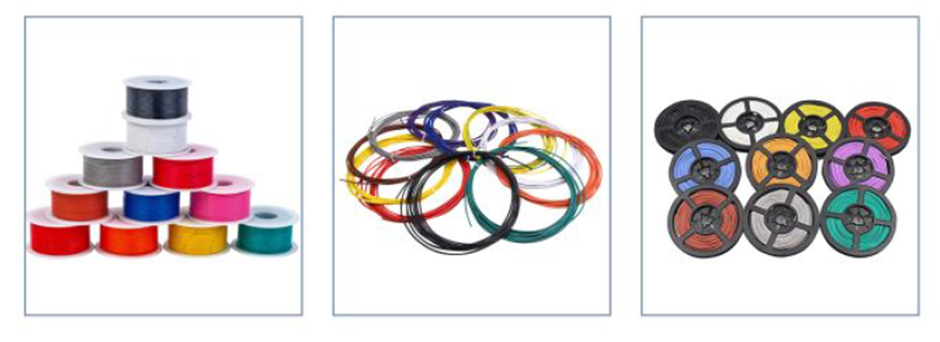
Common Applications of Automotive Cables
Automotive cables are used throughout a vehicle to distribute electrical power and transmit signals between various electronic systems. Different cable types are selected based on factors such as temperature conditions, installation space, and electrical load requirements.
Some of the most common applications of automotive cables include:
Wiring harness systems
Automotive cables are widely used in wiring harness assemblies that connect electronic control units (ECUs), sensors, switches, and other electrical components throughout the vehicle.
Lighting systems
Cables supply power to headlights, taillights, interior lighting, and other lighting systems.
Engine and powertrain systems
In engine compartments, automotive cables must withstand higher temperatures and mechanical stress while delivering power and signals to sensors, actuators, and control systems.
Dashboard and interior electronics
Modern vehicles include numerous electronic features such as infotainment systems, climate control modules, digital displays, and driver assistance systems, all of which rely on reliable wiring connections.
Battery and power distribution systems
Automotive cables are also used in battery connections and power distribution networks to ensure a stable electrical supply across different vehicle subsystems.
As vehicle technology evolves, particularly with the development of electric and hybrid vehicles, the demand for reliable, space-efficient automotive cables continues to rise.
Automotive Cable Solutions
Automotive cable requirements can vary depending on vehicle design, operating environment, and electrical system architecture. Factors such as temperature resistance, flexibility, insulation thickness, and installation space all influence cable selection in automotive wiring harness systems.
To meet these diverse requirements, automotive cables are available in a wide range of constructions, including various conductor designs, insulation materials, and wall-thickness options. These variations allow engineers to select cables that match specific performance and environmental requirements within the vehicle.
Solutions may include cables designed to comply with major international automotive standards such as JASO, ISO, and SAE, supporting applications across different vehicle platforms and regional manufacturing requirements.
In addition to standard cable types, customised solutions, such as specialised cable assemblies and wiring harness components, can be developed to meet specific project needs.
At Active Components, we support customers working on automotive and mobility projects by helping identify suitable cable solutions that align with project requirements and industry standards such as JASO, ISO, and SAE. Our team works with manufacturers and engineers to explore options ranging from standard automotive cables to customised solutions for specific applications.
If you are currently developing a new project or reviewing your wiring design, our team is happy to discuss your requirements and help identify suitable automotive cable solutions.
Speak with our team about your project →
