The demand for reliable, long-lasting power solutions continues to grow. From smart utility meters and asset tracking devices to security systems and remote monitoring equipment, many applications require batteries capable of operating for years without maintenance or replacement.
Lithium primary batteries have become a preferred solution for these applications due to their long service life, high energy density, and ability to perform in demanding environments.
What Are Lithium Primary Batteries?
Lithium primary batteries are non-rechargeable batteries designed to deliver reliable power over extended periods. Unlike rechargeable batteries, they are intended for single-use applications where long operational life and low maintenance requirements are more important than repeated charging cycles.
One of the most widely used chemistries for industrial applications is Lithium Thionyl Chloride (Li-SOCI2), known for its high energy density, stable voltage output, and exceptionally low self-discharge rate.
These characteristics make lithium primary batteries particularly well suited to devices that may remain in the field for many years.
Why Are Lithium Primary Batteries Used in Industrial Applications?
Industrial and loT devices are often installed in locations where battery replacement can be costly, time-consuming, or impractical.
Examples include:
- Smart utility meters
- Asset tracking devices
- Security and alarm systems
- Environmental monitoring equipment
- Wireless sensors
- Automotive electronics
- Smart city infrastructure
For these applications, reliability is critical. A battery failure can result in lost data, interrupted service, or costly maintenance visits.
Key Benefits of Lithium Primary Batteries
Long Service Life
One of the most significant advantages of lithium primary batteries is their ability to support long-term deployments. Their high energy density enables devices to operate for extended periods while minimising maintenance requirements.
For organisations managing large numbers of connected devices, reducing battery replacement frequency can significantly lower operation costs.
Low Self-Discharge
Many lithium primary batteries exhibit extremely low self-discharge rates, allowing them to retain their capacity even after years of storage or deployment.
This makes them ideal for applications that spend long periods in standby mode while remaining ready to perform when needed.
Reliable Performance in Extreme Temperatures
Industrial equipment is often exposed to challenging environmental conditions. Lithium primary batteries can operate across a wide temperature range, making them suitable for outdoor installations, transportation systems, utility infrastructure, and remote monitoring applications.
Stable Voltage Output
Consistent voltage delivery helps ensure reliable device performance throughout the battery's service life, reducing the risk of unexpected power interruptions.
Choosing the Right Battery for Your Application
Not all industrial applications have the same power requirements. Factors such as device size, power consumption, operating environment, and expected service life all influence battery selection.
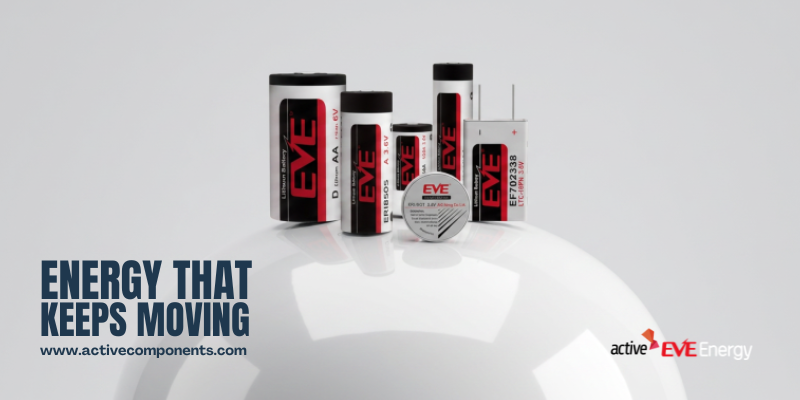
The ER series lithium primary battery range offers multiple capacity and size options, allowing engineers and designers to select a solution tailored to their application's requirements.
Whether powering a compact tracking device or a large-scale utility meter deployment, selecting the correct battery can help maximise reliability and operational efficiency.
Explore the ER Series Lithium Primary Battery Range
Click here: Combined ER Batteries Specs Sheet
Active is here to help
Selecting the right battery is about more than capacity alone. Understanding your application's environmental conditions, power requirements, and expected lifespan is essential for achieving long-term performance and reliability.
Our team can help identify the most suitable battery solution for your project and provide guidance on available configurations, specifications, and application requirements.
Contact us today
